Acid Reflux in TCM: Diet, Lifestyle, and Preventing Relapse
The subtraction-first food strategy, meal-timing rules, and the pattern-specific dietary guidance that keeps reflux from coming back.

TCM Clinical Pro Editorial
Reviewed by licensed acupuncturists
Quick summary
- Reflux relapse is almost always dietary and lifestyle drift, not formula failure.
- Meal timing and portion size outrank food choice for most patients.
- Dietary guidance must match the pattern, cooling foods help heat but harm cold-deficiency.
- Stress, posture, and pace of eating are treatment, not afterthoughts.
The most elegant formula and the most precise point prescription will not hold if the patient rebuilds the problem three times a day at the table. This final article in the series is about the half of reflux treatment that happens outside the clinic: diet, meal timing, stress, and posture, organized so that it actually matches the patient's pattern rather than handing everyone the same generic 'avoid spicy food' list.
Subtraction before addition
The first dietary intervention in reflux is always subtraction, removing the drivers, before adding anything therapeutic. Across all patterns, the universal offenders are: oversized meals (they overwhelm the Stomach's descending capacity), late eating (the Stomach should be winding down, not processing), eating quickly or while stressed (impairs descending), and lying down within 2–3 hours of eating. Many patients improve substantially from these four changes alone, before food choice even enters the conversation.
The three-hour rule
The single highest-yield instruction: nothing but water in the three hours before lying down. Reflux is gravity-assisted at night; a patient who eats dinner at 9pm and sleeps at 10pm has built the perfect conditions for rebellion regardless of what they ate. Move the last meal earlier and lighter.
Food choice must match the pattern
This is where generic reflux advice fails. 'Eat cooling foods' is correct for Stomach Heat and dangerous for Spleen deficiency-cold. Dietary guidance in TCM is pattern-specific, the same food that soothes one patient aggravates another.
| Feature | Pattern | Diet guidance |
|---|---|---|
| Stomach Heat | Favor cooling, neutral | Add: mung bean, cucumber, pear, celery. Remove: coffee, alcohol, fried, spicy |
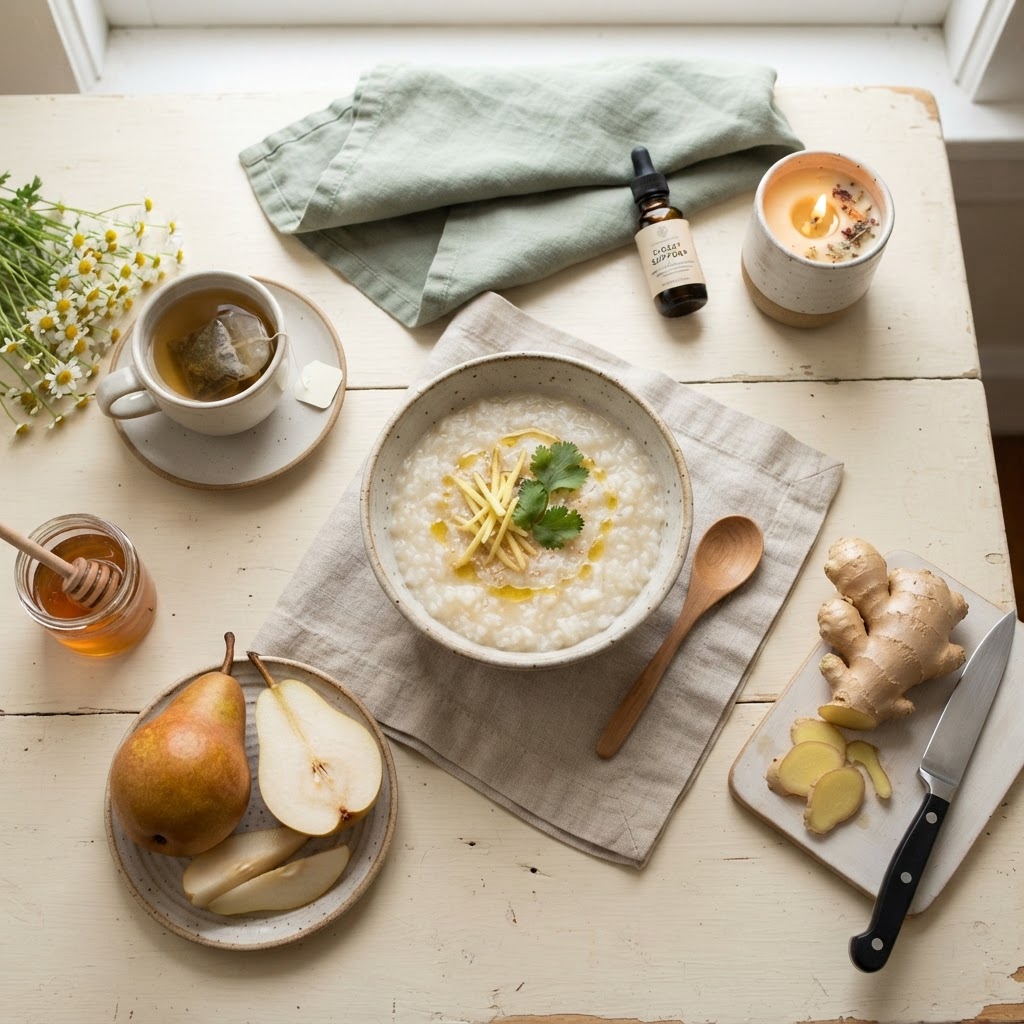
| Spleen/Stomach deficiency-cold | Favor warm, cooked | Add: congee, ginger, cooked root veg, warm soups. Remove: raw/cold food, iced drinks, dairy excess |
| Damp-Heat | Light, drying, non-greasy | Add: barley (Yi Yi Ren), aduki bean. Remove: alcohol, greasy/fried, dairy, sugar |
| Liver invading Stomach | Regular, calm meals | Add: gentle Qi-moving foods (mint, citrus peel). Remove: skipping meals, rushed eating, excess alcohol |
| Stomach Yin deficiency | Moist, nourishing | Add: congee, pear, tremella, soft-cooked foods. Remove: dry/roasted, very spicy, excess coffee |
Foods almost everyone should reduce
While guidance is pattern-specific, a short list of reflux aggravators cuts across most patterns and deserves a blanket reduction: coffee (relaxes the lower esophageal sphincter and adds heat), alcohol (damp-heat and sphincter relaxation), large portions of fried or fatty food (slow to descend, damp-forming), and, for many, chocolate, peppermint in excess, and carbonated drinks. The goal isn't a joyless diet, it's identifying the patient's top two or three personal triggers and reducing those consistently.
Stress, posture, and pace
Because Liver-Stomach disharmony is so common, stress management is dietary advice's equal partner. A patient who eats perfectly but eats every meal tense, rushed, and at their desk keeps the Liver overacting on the Stomach. Practical instructions: sit down to eat, chew slowly, pause between bites, and avoid eating during arguments or intense work. Gentle after-meal walking (not vigorous exercise) supports Stomach descending; lying down or slumping impairs it.
The five-minute reset
Teach patients a simple pre-meal reset: three slow breaths before the first bite, phone away, sitting upright. It sounds trivial, but for stress-driven reflux it measurably improves the descending function by taking the Liver out of overdrive before food arrives.
Building a relapse-proof routine
Relapse prevention is about turning the acute-phase discipline into sustainable habit. The durable routine: earlier and lighter dinners as a default, the three-hour rule most nights, portion awareness, the patient's two or three personal trigger foods kept occasional rather than daily, and a stress practice that fits their life. Seasonal check-ins, especially at times of increased stress or dietary change (holidays, travel), catch drift before it becomes a full relapse.
The takeaway
Reflux comes back through the mouth and through stress, not through formula failure. Subtract the drivers first, match food choice to the pattern (never hand a cold-deficient patient a cooling-food list), reduce the universal aggravators, and treat stress, posture, and pace as part of the prescription. A patient who owns these habits keeps the results you worked to achieve, and that is the real endpoint of treating acid reflux in TCM.
TCM Clinical Pro generates pattern-specific dietary and lifestyle guidance for each patient's reflux diagnosis, so the food advice matches the pattern instead of contradicting it. Try it free for 14 days.
14 days free · No credit card required
Put this into practice
Run a full case through TCM Clinical Pro and get the complete differential, acupuncture protocol and herbal formula in under 3 minutes. Free for 14 days.