Unissez la médecine
orientale et occidentale.
TCM Clinical Pro offre aux praticiens intégratifs le pont clinique dont ils ont besoin : diagnostic de schémas MTC fondé sur les textes classiques, avec corrélations médicales occidentales, recommandations de laboratoire et orientations vers spécialistes en une seule plateforme.
Sans carte de crédit
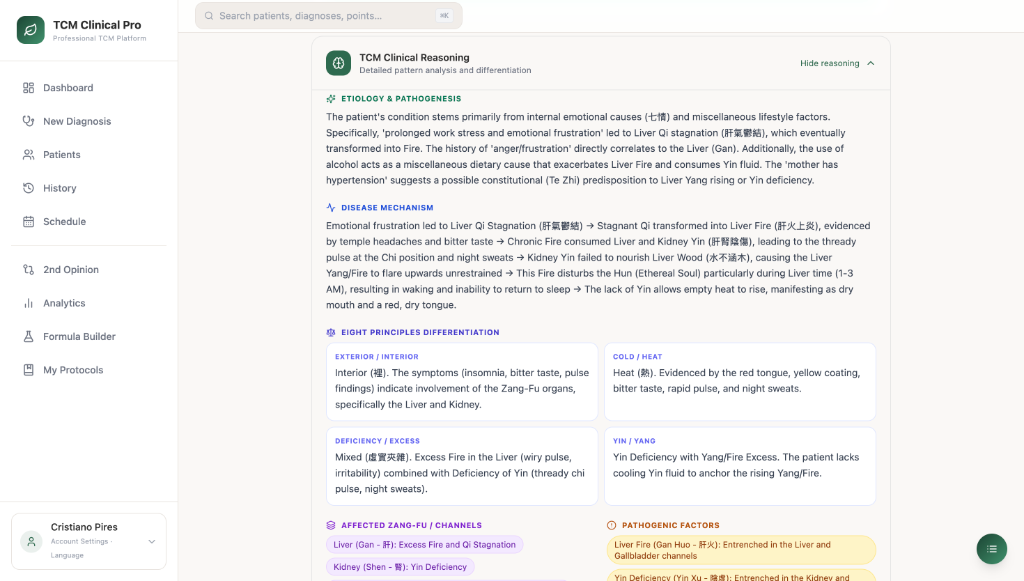
Corrélation Occidentale Générée
Analyses, orientations et suppléments inclus
30+
Pays servis
10+
Modalités de traitement
100K+
Diagnostics
4
Langues de rapport
L'avantage intégratif
Précision MTC avec
contexte clinique occidental.
Couche MTC
- Diagnostic complet 4 piliers (langue, pouls, symptômes, émotions)
- Différenciation de schémas primaires et secondaires
- Protocole d'acupuncture (6 styles)
- Formule herboristique classique avec modifications
- Ventouses, moxa, gua sha, conseils diététiques
Couche de Corrélation Occidentale
- Diagnostics différentiels occidentaux possibles
- Analyses de laboratoire recommandées avec justification
- Études d'imagerie à considérer
- Recommandations d'orientation vers spécialistes
- Suppléments et nutraceutiques avec dosages
Les deux couches générées simultanément à partir d'une seule consultation. Sans changer d'outil.
Moteur de Synthèse Clinique™
Analyse multi-schéma fondée sur les textes classiques, couvrant syndromes MTC et schémas de médecine fonctionnelle simultanément.
Intégration Herbes + Suppléments
Formules herboristiques classiques avec recommandations de suppléments basées sur des preuves pour un protocole intégratif complet.
Suivi des Résultats
Suivez les progrès du patient sur 7+ métriques par séance, communiquez en langage MTC et biomédical.
Modules Femmes & Pédiatrie
Évaluation et protocoles spécialisés pour gynécologie, santé hormonale, ménopause et cas pédiatriques.
Rapports Multilingues
Générez des rapports patient en anglais, espagnol, portugais ou français.
Conforme aux Normes
Infrastructure conçue RGPD et HIPAA. Journaux d'audit complets.
hypothèses diagnostiques évaluées par cas
Chaque cas est confronté à plus de 250 hypothèses diagnostiques
Ce n'est pas une table de correspondance. Le Clinical Synthesis Engine™ croise l'anamnèse complète de votre patient avec les cadres différentiels documentés dans le canon classique, puis classe les schémas qui correspondent réellement.
4
examens en validation croisée (四诊合参)
360+
points d'acupuncture avec justification de technique
275+
plantes de la Matière Médicale reliées aux schémas
Fondé sur le canon classique
Le moteur raisonne à partir des textes fondateurs de la lignée, pas de données génériques d'internet.
Huangdi Neijing
Théorie fondatrice des Zang-Fu et des méridiens
Shanghan Lun
Cadres différentiels en six stades
Jingui Yaolue
Formules classiques et schémas internes
Wen Bing Xue
Pathologie de la chaleur en quatre niveaux
Comment fonctionne la synthèse
Anamnèse structurée
Symptômes, langue, pouls, émotions et antécédents sont capturés comme données cliniques.
Cartographie des hypothèses
Chaque donnée est confrontée à plus de 250 schémas candidats de la littérature classique.
Validation croisée
Langue, pouls et symptômes sont vérifiés pour leur cohérence, les contradictions sont signalées, jamais cachées.
Différentiel classé
Vous recevez un différentiel avec score de confiance et le raisonnement complet pour votre revue.
Chaque résultat montre son raisonnement. Vous restez le clinicien, le moteur fait le gros travail de croisement des références.
Measured integrative outcomes
Bridging disciplines with measurable impact.
Based on aggregated self-reported data from integrative health practitioners using TCM Clinical Pro:
92%
cross-referencing accuracy
TCM patterns correctly correlated with Western differentials
45 min
saved per intake
Dual-framework assessment generated from single clinical intake
3×
faster lab recommendations
Relevant lab panels identified alongside TCM pattern diagnosis
86%
protocol acceptance rate
Combined TCM + Western protocols used without adjustment
71%
improved interdisciplinary communication
Practitioners report clearer referral letters and shared records
Based on self-reported user data. Individual results may vary. Not a clinical trial.
À l'intérieur de la plateforme
Conçu pour le travail clinique réel.
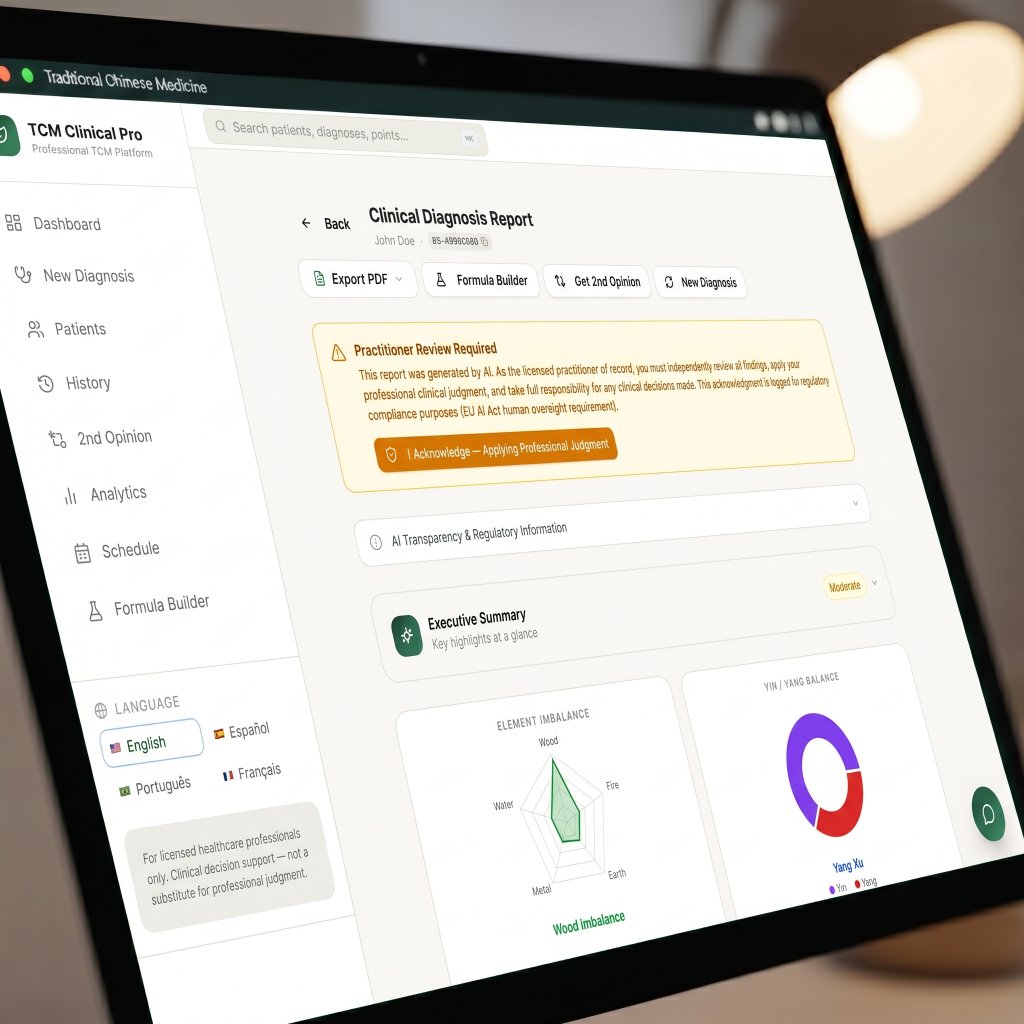
Diagnostic des schémas

Traitement manuel
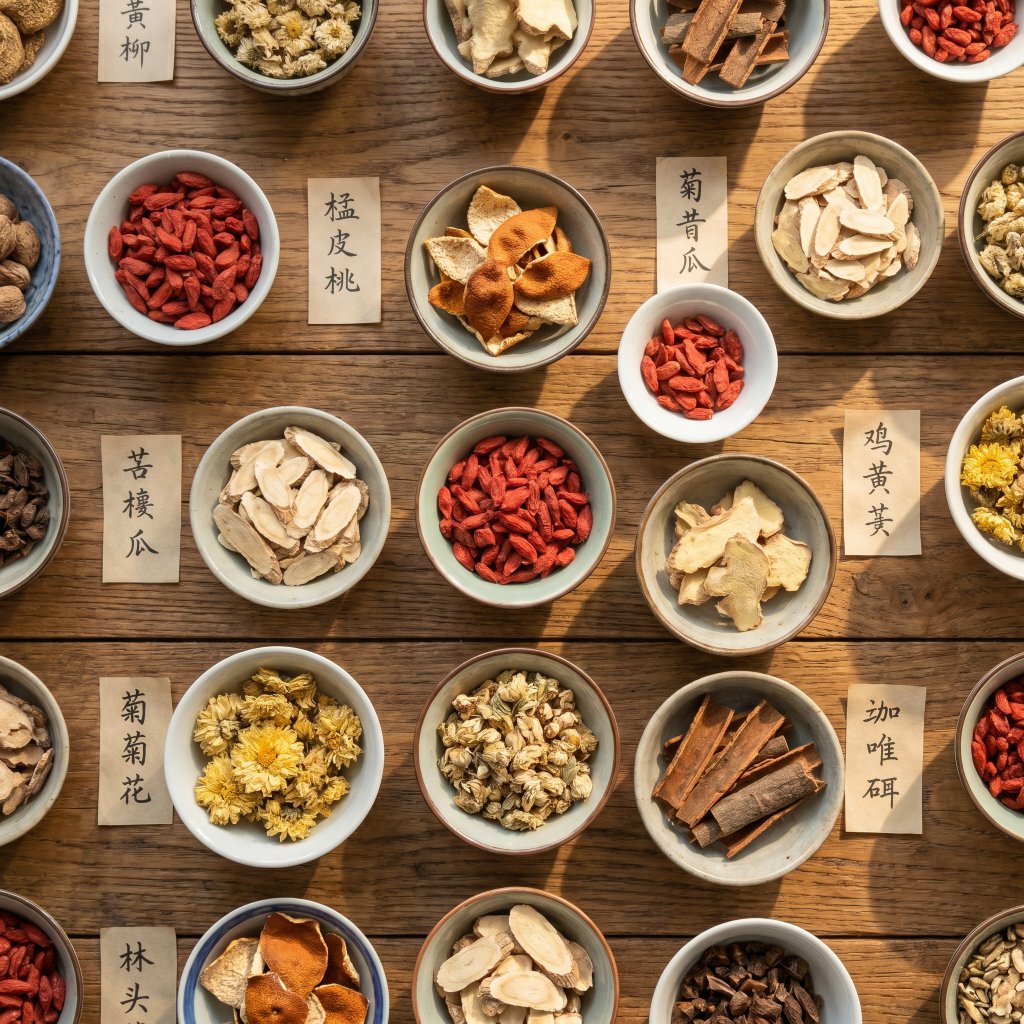
Formules à base de plantes classiques

Consultation patient

Évaluation langue et pouls
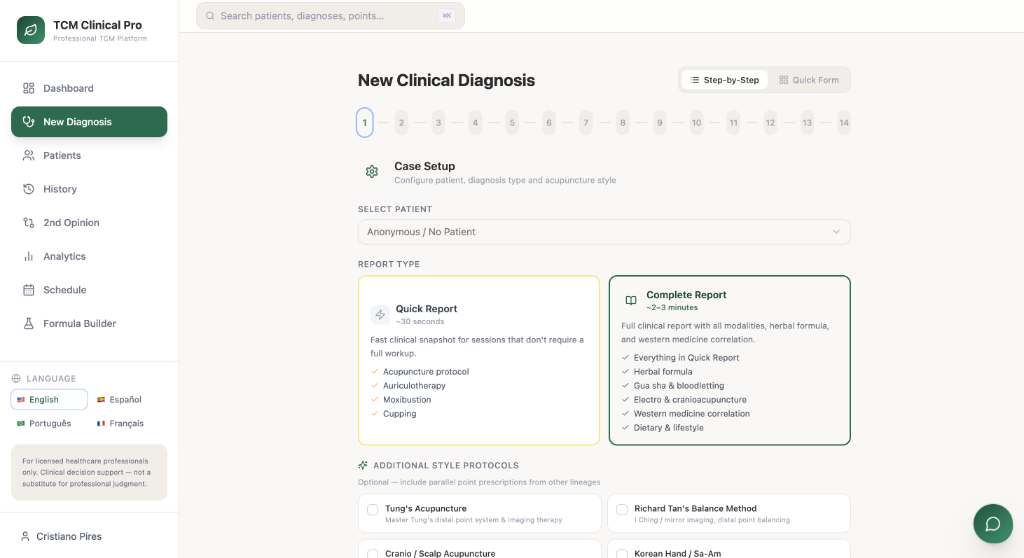
Rapports générés
Trusted by US practitioners
What licensed pros across the United States are saying.
"I run a functional medicine practice and finally have a clean bridge between Eastern pattern diagnosis and Western differentials. The dual-language reports make co-management with my acupuncturist effortless."
Dr. Andrew Pearce, MD
Lakeshore Integrative Health, Chicago, IL
15 yrs
"The herbal safety flags catch interactions with my patients' Rx meds before I prescribe. That alone justifies the subscription for our naturopathic clinic."
Dr. Rachel Nguyen, ND
Verdant Health Collective, Seattle, WA
10 yrs
"We've moved away from cookie-cutter protocols. The TCM lens adds a layer my MD colleagues actually engage with, and it's HIPAA-aligned, which my compliance officer signed off on quickly."
Dr. Marcus Brennan, DO
Heartland Functional Medicine, Denver, CO
11 yrs
Names, clinics, and locations shown above are illustrative composites representing typical feedback from US practitioners. Real names withheld to protect client privacy. Individual results vary.
Real Clinical Cases
When labs are 'normal' but the patient isn't, the diagnostic puzzles.
Real cases where Western labs missed the pattern. TCM reveals the functional disorder before it becomes pathology.
Case 1: The 'It's All In Your Head' Patient
38yo Female, 3 years of post-viral fatigue (post-COVID). Brain fog, post-exertional malaise (24–72h crash after any effort), unrefreshing sleep, palpitations on standing, intermittent low-grade fevers. Labs: 'normal' CBC, normal TSH, ANA negative, ESR 18, basic metabolic panel normal. Two specialists dismissed her. Tongue: pale and dusky with red tip, thin yellow coat at root, swollen with teeth marks. Pulse: thin and rapid, weak on both chi, slippery on right guan.
Diagnosis
Lingering Pathogen (Fu Xie) in the Shao Yin layer with Qi and Yin Dual Deficiency, complicated by Damp-Heat smoldering in the Triple Burner and secondary Heart-Kidney Disharmony.
TCM Reasoning
Classic 'Lurking Pathogen' presentation, the original viral pathogen wasn't fully expelled and now hides deep in the Shao Yin layer, emerging episodically (the low-grade fevers and crashes). The combined pale-with-red-tip tongue with rooted yellow coat is pathognomonic. Western labs measure inflammation snapshots, they miss the cyclical emergence. The standing palpitations indicate Heart Qi unable to descend to Kidney; this is functional dysautonomia in TCM terms.
Western Correlation
Long COVID / ME-CFS with probable POTS overlay. Recommended: 10-min standing test (heart rate increase >30 bpm), tilt-table if positive; reactivated viruses panel (EBV, HHV-6, CMV); morning + evening cortisol; NK cell function; mitochondrial markers (organic acids). Refer to Long COVID clinic, but TCM treatment proceeds in parallel.
Treatment
Phase 1 (4 weeks): clear Lurking Pathogen WITHOUT depleting. Sheng Ma Bie Jia Tang modified, lift and disperse, never aggressive purging (PEM trigger). Acu: GV14, BL13, KI3, SP6, short, gentle sessions (15 min). NO electroacupuncture initially (worsens PEM). Phase 2: Tonify with Sheng Mai San + Bu Zhong Yi Qi Tang base. Pacing protocol critical. Mitochondrial support: CoQ10, magnesium glycinate, B-complex. Avoid 'pushing through' fatigue, every crash deepens the pattern.
What to tell the patient
"Imagine an ember hiding deep inside a log, it looks like the fire is out, but every now and then it flares up and burns the whole pile again. Standard tests only check if the flames are visible; they miss the ember. We can't blow on it hard (that's what crashes you), we have to smother it slowly, in layers, until there's nothing left to flare."
Case 2: The Endometriosis Mystery
31yo Female, 9 years of debilitating dysmenorrhea, deep dyspareunia, cyclic GI symptoms (diarrhea premenstrually, constipation mid-cycle), fatigue, low-back pain radiating to right thigh on days 1–2 of cycle. Laparoscopy 2 years ago: 'minimal endometriosis,' surgically removed. Symptoms returned within 8 months. CA-125 normal. Tongue: dusky purple body with purple spots on the sides, sublingual veins distended. Pulse: deep, wiry on both guan, choppy on left chi.
Diagnosis
Severe Blood Stasis (Xue Yu) in the Lower Burner with Cold congealing the Chong and Ren vessels, on a background of Liver Qi Stagnation invading the Spleen, secondary Kidney Yang Deficiency.
TCM Reasoning
The 'minimal endometriosis' label is the trap, the laparoscopy showed minimal visible lesions but the systemic pattern is profound Blood Stasis affecting multiple meridians. The radiating leg pain follows the Liver and Kidney channels through the inner thigh. The cyclic alternation of diarrhea/constipation is Liver invading Spleen oscillating with deficiency. The deep purple tongue and distended sublingual veins indicate this is far more than 'minimal', surgery removed visible lesions but did nothing for the deep stagnation generating them.
Western Correlation
Endometriosis with likely adenomyosis (often missed on laparoscopy) and pelvic floor dysfunction. Recommended: transvaginal ultrasound with deep endometriosis protocol; MRI pelvis with rectal contrast; pelvic floor PT evaluation; consider AMH (ovarian reserve); rule out Hashimoto's (45% comorbidity). Discuss hormonal options with gyn, but TCM addresses the recurrence driver.
Treatment
Days 1–3 of cycle (treat the pain, move stasis): SP10, SP6, LV3, ST29, SP8 (Di Ji, uterine cramping). Strong stimulation. Moxa on lower abdomen + lumbar (CV4, BL23, BL32) days 14–28 (warm Cold, move Blood). Herbs cycle-phased: Days 1–7 Shao Fu Zhu Yu Tang (move stasis, warm cold). Days 8–14 Tao Hong Si Wu Tang (build Blood). Days 15–28 Wen Jing Tang base (warm Chong/Ren, prevent stasis returning). Strict dietary: no cold/raw foods around menses; bone broth + warming spices. Stress management non-negotiable. Realistic timeline: 3 cycles before pattern shifts, 6–9 for stable relief.
What to tell the patient
"Imagine a garden where weeds keep growing back. Surgery pulled the visible weeds, but the soil itself is still feeding them. That's why they returned within months. We're not just cutting weeds this time; we're changing the soil so they can't grow back. You won't see the difference in the first cycle, but by the third the garden looks different."
Commencez à intégrer plus intelligemment aujourd'hui.
Essai gratuit de 14 jours. Sans carte de crédit. Accès complet à toutes les fonctionnalités dès le premier jour.
🍪 We use cookies
We use cookies to improve your experience and analyse site usage. By continuing, you agree to our Privacy Policy.